
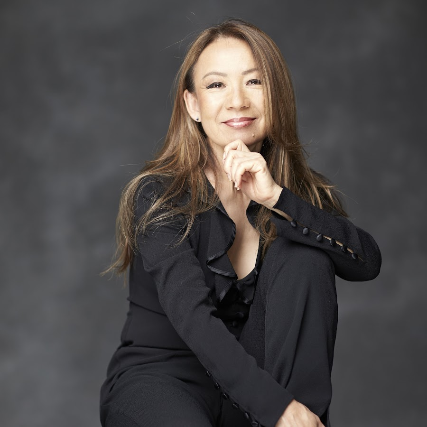
JUNKO YAGAMI: Pop Meets Jazz on Route 66
Sonntag, 15. November 2026, 20:30
- Veranstaltungsort
- Birdland Theater, 315 West 44th Street, New York
- Kategorie
- Musik
What happens when Japans City Pop meets New York jazz? Nobody knows. Thats exactly the point. This isnt a tribute show. This isnt nostalgia. This is a live experiment four world-class musicians walking into Birdland Theater with decades of Japanese pop and American jazz in their bones, and no predetermined destination. The songs will be familiar. What happens to them wont be. Junko Yagamis catalog has already proven it can travel. Songs like Bay City, crafted in the late 1970s with American grooves and independent female spirit baked into every bar, have accumulated billions of streams worldwide not through marketing, but through pure musical gravity. Listeners in Brazil, Indonesia, Germany, South Korea, and across the United States discovered them on their own and couldnt stop playing them. The City Pop phenomenon is real, it is massive, and Yagami is at its center. Ross Pederson bandmaster and drummer for this engagement is one of New Yorks most electrifying percussionists: a founding member of Snarky Puppy, a collaborator of Fred Hersch, Patricia Barber, Donny McCaslin, and Patti Austin, and a player whose 2023 debut album, *Identity*, drew raves from Modern Drummer, DownBeat, and JazzTimes. His drumming is explosive, nuanced, and relentlessly alive. What he does with a groove is not decoration it is transformation. The program moves through beloved American standards tied to the mythology of Route 66 alongside Yagamis most celebrated Japanese compositions, all newly arranged and reimagined for this night. Route 66 is the organizing metaphor: a road that carried American music blues, jazz, folk, soul westward across a continent, absorbing everything in its path and transforming it into something new. WHO IS JUNKO YAGAMI? The short answer: Japans most globally significant female vocalist of the past half century. The longer answer begins in Nagoya, with a teenager who barely listened to Japanese music who transcribed incomprehensible English lyrics into phonetic characters just to sing along with Barbra Streisand and The Carpenters, who fell in love with the image of Western women who stood strong and never apologized for it. That sensibility never left her music. A massive commercial breakthrough came early. A decade of industry pressure followed. Then came liberation a move to Los Angeles, a long pause, a return to Japan galvanized by the 2011 earthquake and volunteer work in the disaster zones of Tohoku. Things I couldnt do for myself, I could do for others. She rebuilt her career entirely on her own terms: self-produced, self-managed, answering to no one but her audience. In 2022 she became the first Japanese artist inducted into the Women Songwriters Hall of Fame in the United States not through lobbying, but because Hall judges found her on YouTube and heard what she had always been. Her voice carries all of it: the discipline of a professional who survived the industry, the freedom of an artist who escaped it, and the depth of someone who has spent fifty years singing because she genuinely cannot do otherwise.
Zuletzt aktualisiert:
Das könnte dich auch interessieren
Lily Allen performs West End Girl
Auckland

Creedence Clearwater Collective
Wellington
The Butterfly Effect - Portal To Hell
Moore Park